KELIBRON
 测量方法
卡尺测量误差及避免方法
要点
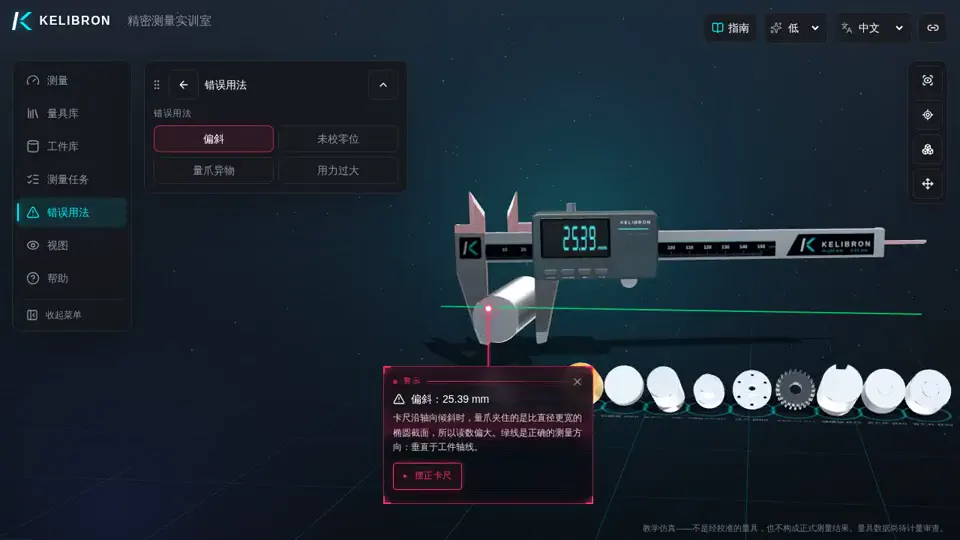
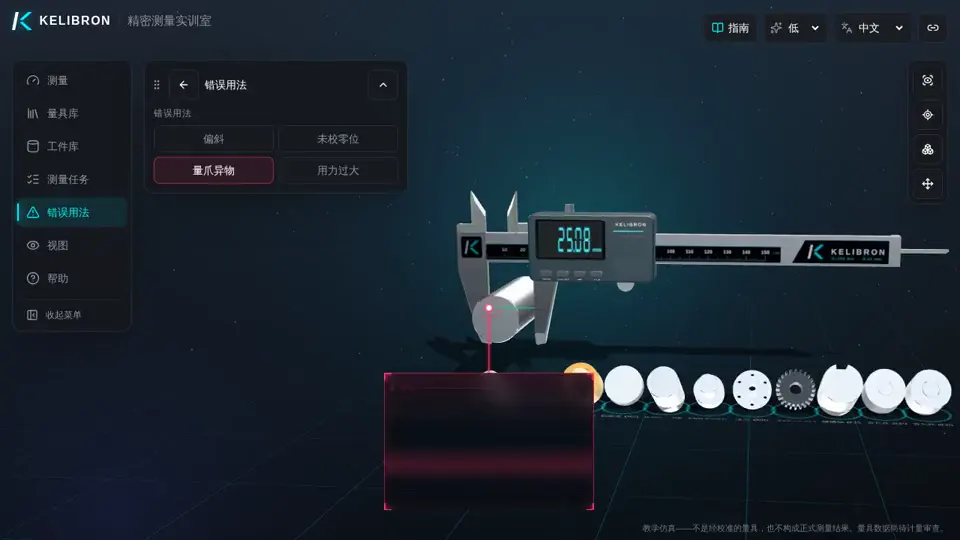
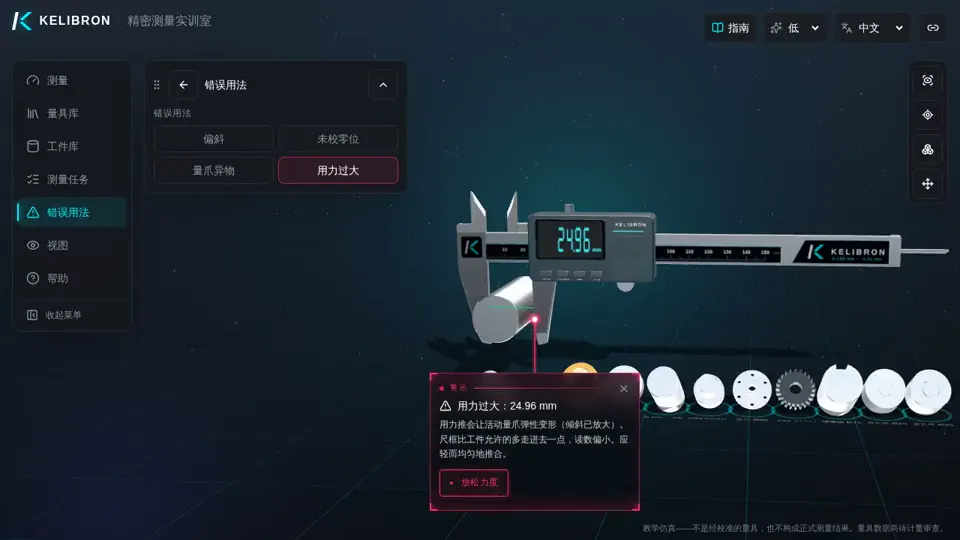
大多数卡尺读数错误来自操作,而不是量具本身:未校零、卡尺偏斜、有脏物、用力过大、视差,或离尺身太远测量。
误差来源
测孔与测深特有的误差
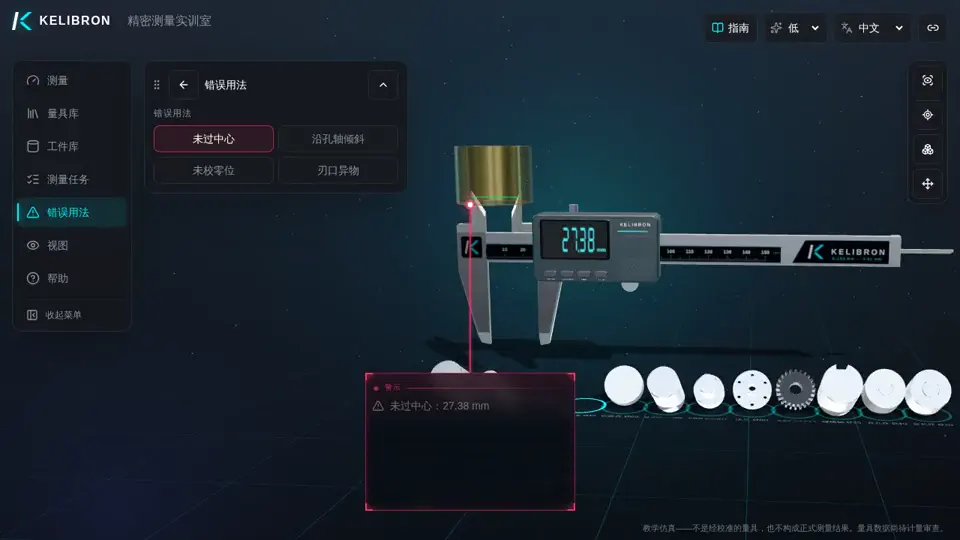
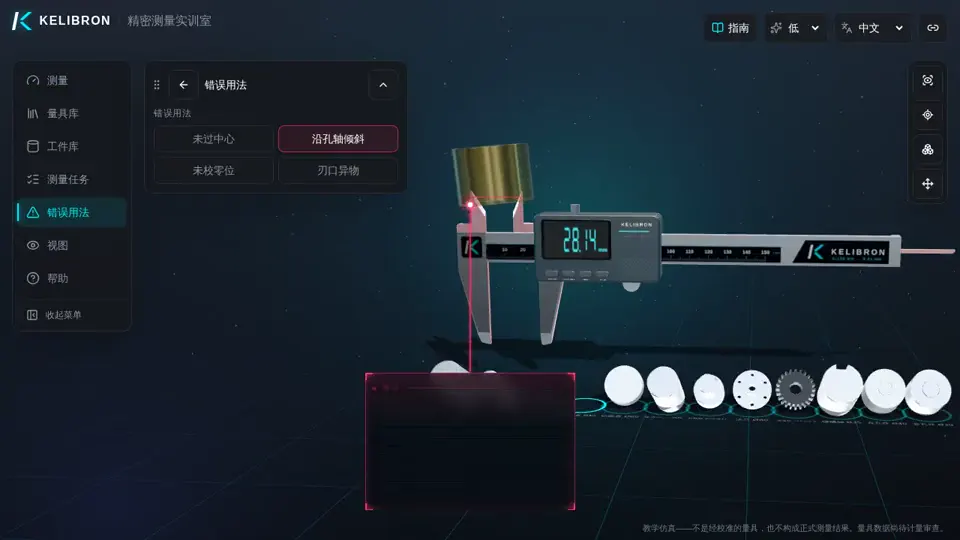
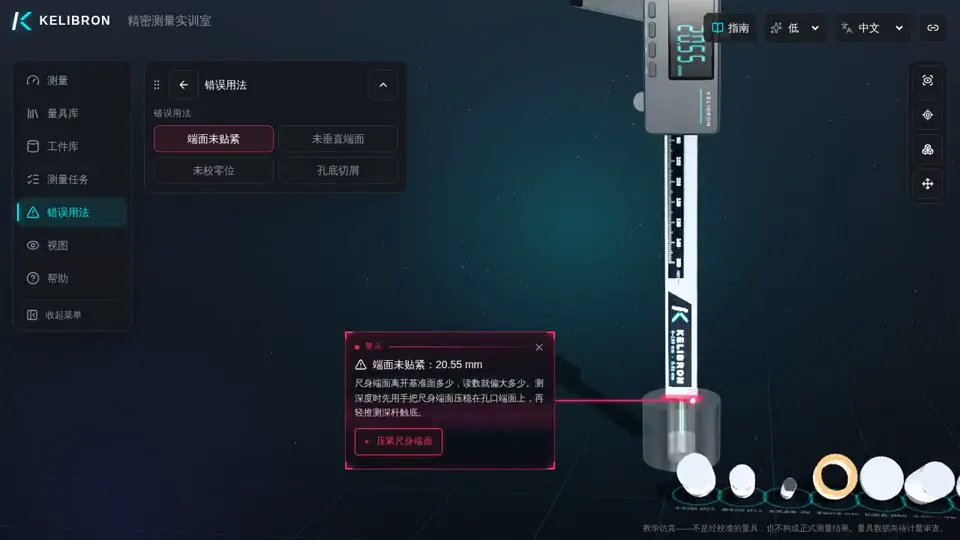
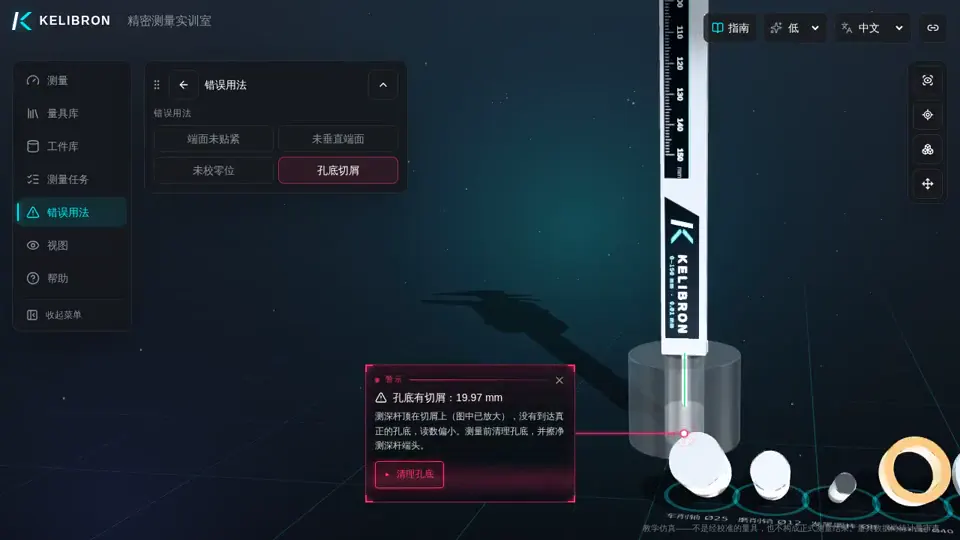
测孔时,内测量爪偏离直径测到的是弦长,读数偏小;沿孔轴倾斜读数偏大(D / cos α)。测深时,尺身端面没贴紧基准面,读数偏大一个缝隙;卡尺倾斜读出 h / cos α;孔底有切屑读数偏小。KELIBRON 对每一种都有演示和引导纠正。
参考资料
- ISO 1:2022 — Geometrical product specifications (GPS) — Standard reference temperature for the specification of geometrical and dimensional properties · ISO
- T. Doiron, “20 °C — A Short History of the Standard Reference Temperature for Industrial Dimensional Measurements”, J. Res. NIST 112(1), 2007 · NIST
- JCGM 200:2012 — International vocabulary of metrology — Basic and general concepts and associated terms (VIM, 3rd edition) · JCGM / BIPM
- ISO 13385-1:2019 — Geometrical product specifications (GPS) — Dimensional measuring equipment — Part 1: Design and metrological characteristics of callipers · ISO
完整复现
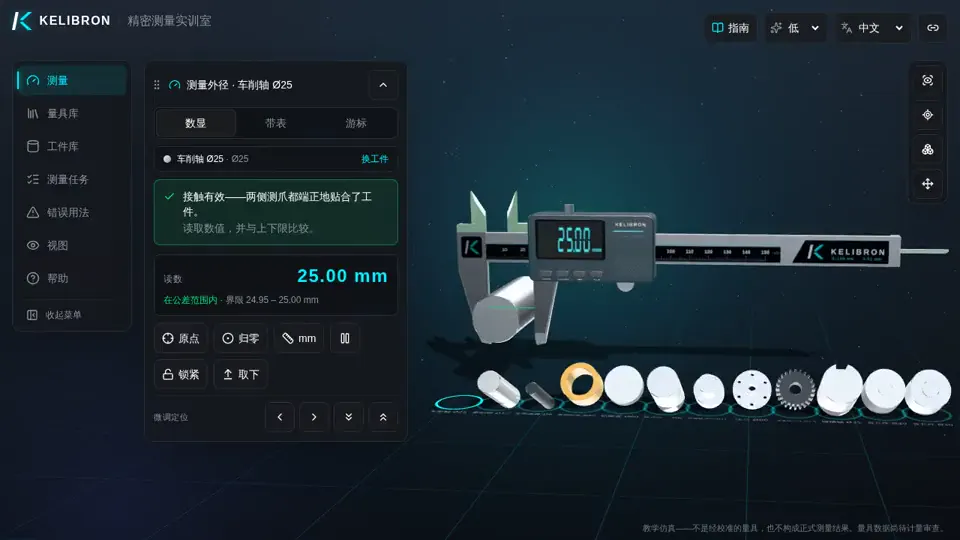
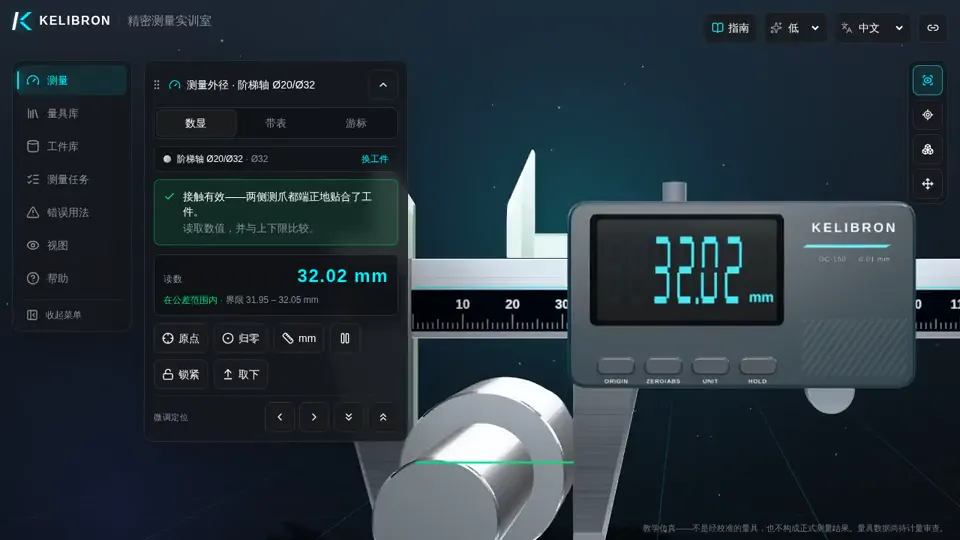
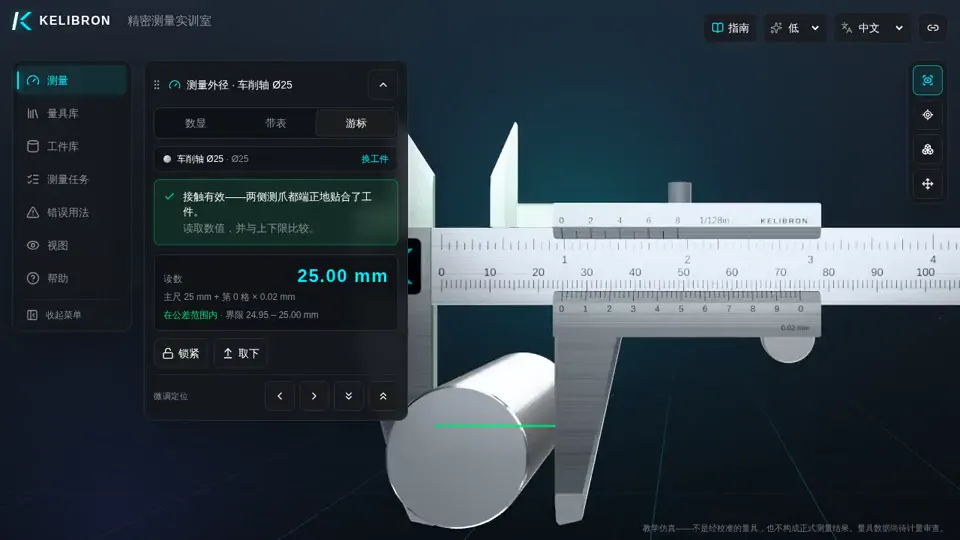
由实训室按领域命令复现;读数与判定来自测量模型。
在实训室中练习
常见问题
卡尺的阿贝误差是什么?
被测长度不在刻度轴线上(量爪偏离尺身),量爪的微小倾斜会变成长度误差。尽量靠近尺身测量可减小阿贝误差。
温度为什么会影响测量?
长度标准以 20 °C 为准。100 mm 的钢件温度升高 5 °C,约长 6 µm。
动手试一试
在三维实训室中打开同样的场景,自己读一次数。