 KELIBRON
 3 guides
Measuring methods
Outside, bore, depth, steps and centre distances on real parts, and the mistakes that spoil a reading.
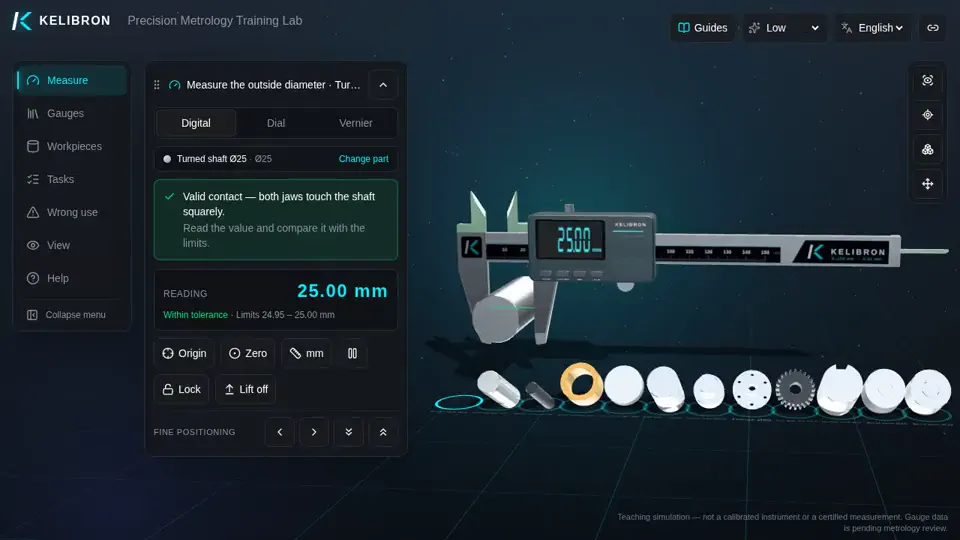 1 min readMeasuring common partsMeasure every diameter at several places along the part and in two directions 90° apart; the spread reveals taper and out-of-round.
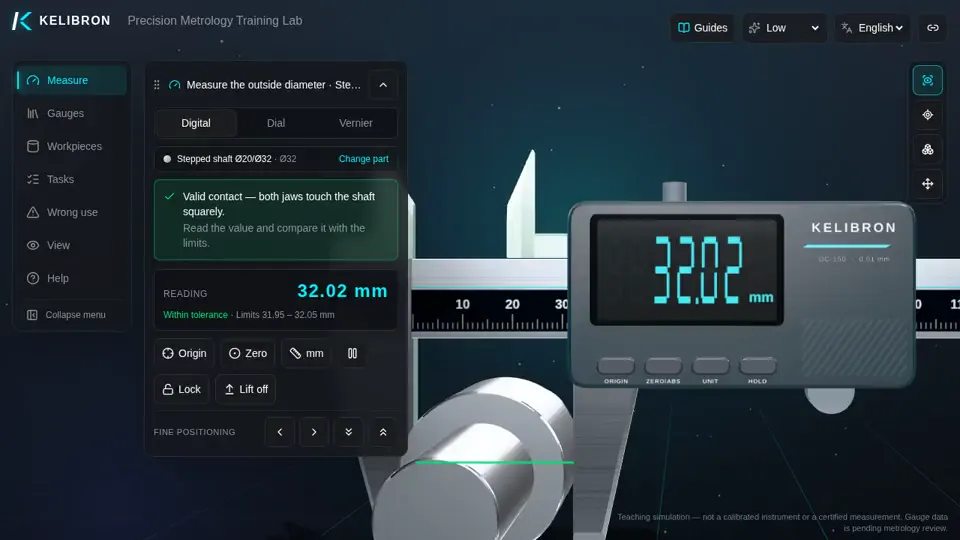 1 min readSteps, hole-to-edge and centre distanceA caliper cannot touch a hole centre, so centre distances are calculated: across the far edges of two holes C = L(outer) − (d1 + d2)/2; across the near edges C = L(inner) + (d1 + d2)/2.
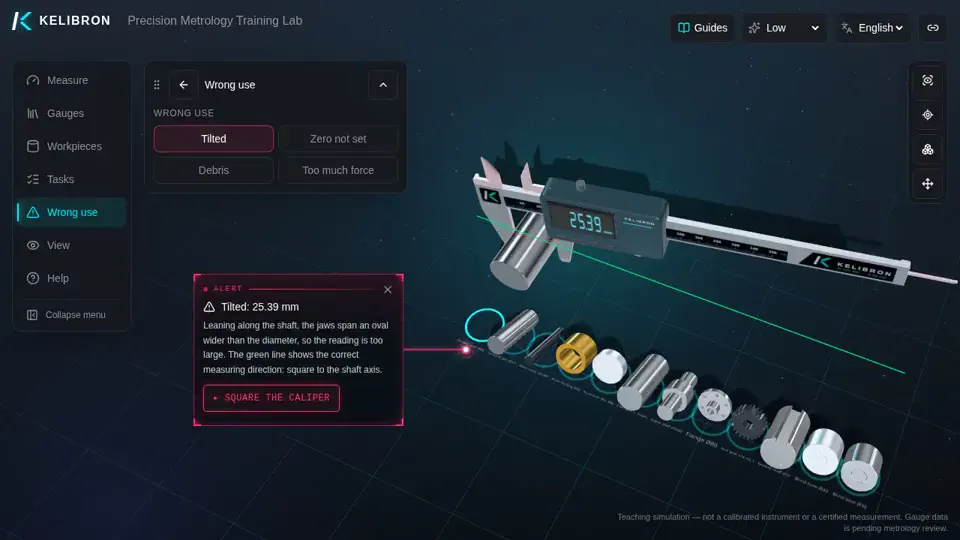 1 min readCaliper measurement errors and how to avoid themMost wrong caliper readings come from the setup, not the instrument: an unchecked zero, a tilted caliper, dirt, too much force, parallax or measuring far from the beam.
Browse by topic
Reading calipers
How vernier, dial and digital calipers are read, with worked examples — the place to start.
Tolerances and decisions
Limits and fits, choosing an instrument for the tolerance, and how uncertainty affects pass or fail.
Instrument care
Daily checks, calibration with gauge blocks, registers, labels and records.
Teaching and certification
Using the lab in class and in company training, and what practical assessments check.